
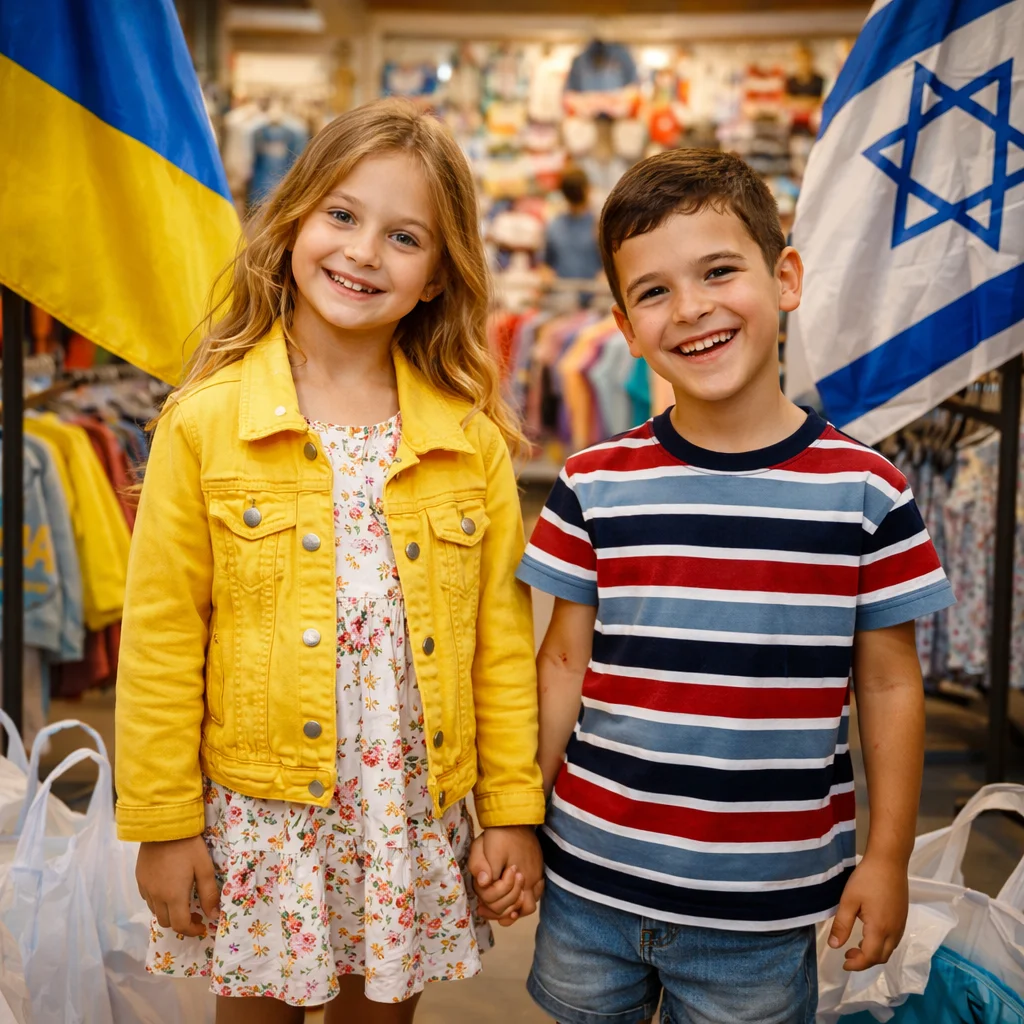
Children’s clothing in Ukraine and Israel balances style, comfort, and practicality. Why platforms like super-kids.org become places where parents never leave empty-handed.
Children’s Clothing in Ukraine and Israel: How Style, Practicality, and Everyday Reality Come Together
Children’s clothing is one of those topics that looks simple until you are actually responsible for buying it.
Kids grow fast.
They get dirty even faster.
They care about comfort, parents care about durability, and seasons change differently depending on where you live.
Now put Ukraine and Israel into the same sentence — and the picture becomes even more interesting.
Different climates.
Different daily routines.
Different cultural expectations.
Yet one shared reality: no mother wants to leave a good children’s clothing store empty-handed.
That is exactly the space where projects like super-kids.org live — at the intersection of practicality, style, and real family life across borders.
Two Countries, Two Climates, One Wardrobe Challenge
Ukraine and Israel could not be more different when it comes to weather.
In Ukraine, parents think in layers:
cold winters, wet autumns, unpredictable springs, serious outerwear.
In Israel, the challenge is almost the opposite:
heat, sun, long summers, mild winters, and constant movement.
Children’s clothing for families connected to both countries has to adapt. Breathable fabrics. Smart cuts. Clothes that survive washing, running, climbing, and sudden growth spurts.
Fashion matters — but only if it works.
What Parents Actually Look For (Not What Ads Promise)
Real parents don’t shop children’s clothing for Instagram.
They shop for:
- comfort that lasts a full day
- fabrics that don’t irritate skin
- designs kids actually want to wear
- quality that survives school, kindergarten, and playgrounds
That’s why platforms like super-kids.org feel intuitive to parents. The focus isn’t “look at this trend.” It’s “this will work for your child, in real life.”
Bright enough to feel fun.
Simple enough to mix and match.
Durable enough to justify the price.
Clothing as Part of a Family System
Children’s clothing doesn’t exist on its own. It’s part of a bigger routine: school runs, activities, holidays, family gatherings.
Parents think about mornings.
About how fast kids can dress themselves.
About whether something will survive a long day without complaints.
This practical mindset is similar to how families think about health and energy more broadly. When adults are exhausted, everything becomes harder — including managing kids.
That’s why conversations about energy, resilience, and everyday performance quietly overlap with family topics. Platforms like https://care-plus.site/ and https://care-plus.shop/ operate in a different market, but touch the same underlying concern: keeping daily life functional when responsibilities pile up.
Different products. Same pressure.
Israel: Movement First, Aesthetics Second
In Israel, children move. A lot.
School days are long. Afternoons include sports, friends, errands, family visits. Clothing needs to follow the body, not restrict it.
Loose cuts. Stretch fabrics. Lightweight layers. Sun-friendly materials.
Parents quickly learn that “beautiful but uncomfortable” clothing stays in the closet. Israeli kids vote with their feet.
That’s why Israeli parents appreciate collections that balance style with movement — not stiff, not fragile, not precious.
Ukraine: Style Meets Practical Survival
In Ukraine, children’s clothing often carries a different expectation.
Yes, comfort matters. But appearance still plays a stronger role — especially for school, celebrations, and public outings. Parents look for clothes that signal care, neatness, and attention.
At the same time, economic reality teaches pragmatism. Clothes must last. They must be versatile. They must justify their place in the budget.
That combination — style without excess — is where cross-border children’s brands find their strongest audience.
Why Mothers Rarely Leave Empty-Handed
The phrase “a place where no mother will leave empty-handed” is not marketing poetry. It’s behavioral truth.
Parents don’t browse children’s clothing casually. When they find a place that works, they stock up:
- one size for now
- one size for later
- something for school
- something “just in case”
This is not impulse shopping. It’s strategic.
Children’s Clothing as Emotional Safety
There’s also an emotional layer parents rarely admit.
Good children’s clothing feels like control in an uncontrollable world. Especially for families split between countries, languages, or cultures.
Clothes are tangible care.
A way to say: “You’re protected. You’re prepared.”
That matters more than trends.
Media, Context, and the Bigger Picture
Family life never exists in a vacuum. News, social pressure, and global events shape how parents think and plan.
That’s why many families stay connected to broader informational platforms like https://cupa.net/, which cover social and political realities. Not because parents want drama — but because understanding context helps them plan.
Clothing, education, health — all of it reacts to the world outside the home.
A Shared Market Built on Trust
What connects Ukraine and Israel in children’s clothing is not fashion. It’s trust.
Parents trust stores that:
- understand children, not mannequins
- respect budgets
- deliver consistency
- don’t overpromise
Projects like super-kids.org work because they speak this language. Quietly. Without pressure.
Why This Market Keeps Growing
Children grow.
Families adapt.
Borders shift.
But the need for reliable, comfortable, good-looking children’s clothing never disappears.
If anything, it becomes more important in uncertain times — when parents want at least one thing they don’t have to worry about.
And if a store makes that easier, mothers remember.
They come back.
And yes — they rarely leave empty-handed.