
At first glance, it sounds like a joke.
Ultra-Orthodox Jews.
In black coats and hats.
Quiet agricultural plots.
And… snails.
Not metaphorical snails. Real ones. Slow, shelled, slimy, carefully monitored snails — raised with rabbinical supervision, clipboards, schedules, and a level of seriousness usually reserved for religious study.
And yet, this story is very real. And very Israeli.
The Immediate Question Everyone Asks
Let’s start with the obvious:
Aren’t snails not kosher?
Correct. Mostly.
According to Jewish dietary law, most snails are forbidden. They fall under the category of crawling creatures without fins or scales — generally a no-go.
But Judaism, as usual, is precise.
There are specific species of snails that can be permitted under strict conditions, mainly for export markets or for non-food purposes. And once you add global trade, cosmetics, pharmaceuticals, and agriculture into the picture, the story gets a lot more interesting.
Ultra-Orthodox farmers didn’t discover a loophole.
They discovered a system.
Why Snails — of All Things?
Israel is not exactly famous for escargot.
But snails are valuable. Very valuable.
Snail mucus (yes, that mucus) is widely used in cosmetics and dermatology. It’s known for skin regeneration, hydration, and repair properties. Globally, the demand is high — and growing.
That’s where projects connected to cosmetology and aesthetic medicine come in. Clinics and suppliers linked to platforms like https://cosmetology.nikk.co.il/ operate in a world where raw ingredients matter just as much as procedures. And snail extract, when produced under controlled, ethical, traceable conditions, is gold.
Snails are also exported — not necessarily for kosher consumption, but for international markets where dietary laws are different.
Ultra-Orthodox communities noticed something important:
Snail farming requires patience, control, cleanliness, and strict supervision.
In other words — skills they already have.
Agriculture Meets Halacha
Snail farms run by ultra-Orthodox groups look nothing like romantic French countryside fantasies.
They are organized. Quiet. Almost clinical.
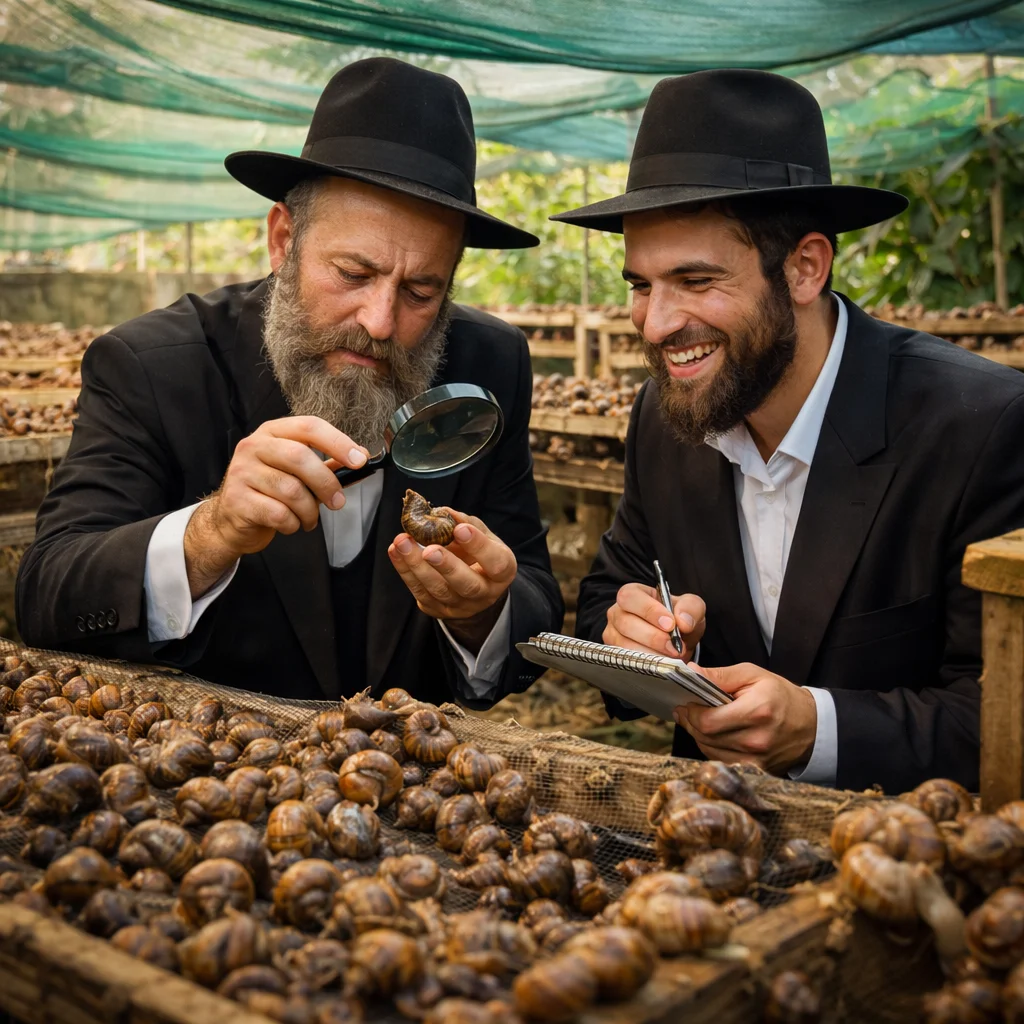
Every stage is documented. Species are verified. Contact with forbidden materials is prevented. Rabbis inspect conditions regularly. Workers follow rules with almost ritual precision.
From the outside, it may look excessive.
From the inside, it’s normal.
Halacha (Jewish law) is deeply procedural. Snail farming fits into that mindset surprisingly well.
No improvisation.
No shortcuts.
No “probably fine.”
Just process.
Not About Eating — About Control
Here’s an important distinction:
Most ultra-Orthodox snail projects in Israel are not about eating snails locally.
They are about:
• export
• cosmetic use
• pharmaceutical research
• agricultural experimentation
The snails themselves may never appear on an Israeli plate — but their byproducts travel far.
This makes the practice halachically manageable and economically smart.
A Community That Understands Niche Markets
Ultra-Orthodox communities in Israel often specialize in niche economies.
Diamonds.
Religious publishing.
Software QA.
Call centers.
Specialized agriculture.
Snails fit perfectly into this logic.
They require:
• small land footprint
• limited external interaction
• predictable cycles
• controlled environments
Which makes them ideal for community-based enterprises that value separation, oversight, and internal trust.
The Unexpected Family Parallel
Snail farming, oddly enough, is also deeply domestic.
Snails are sensitive. They react to noise, vibration, temperature, humidity. They need routine. Calm. Repetition.
Farmers joke that snails behave a bit like small children.
Which makes it oddly fitting that communities used to family-centered, home-based production gravitate toward them.
That mindset is easy to recognize in other food-oriented, family-run projects — like handmade frozen foods or traditional cooking initiatives similar in spirit (though not in content) to https://pelmeni-vareniki.km.ua/, where consistency, cleanliness, and trust matter more than scale.
Different product. Same philosophy.
Yes, There’s Humor Involved
Ultra-Orthodox snail farmers are not humorless.
They are very aware of the irony.
Men in black coats checking snail habitats.
Rabbinical inspections involving magnifying glasses and slime.
Export paperwork for creatures that move two centimeters per minute.
There are jokes. Plenty of them.
But the humor doesn’t undermine the seriousness. It softens it.
In Israel, if you can’t laugh at yourself, you don’t survive long.
Why This Is Very Israeli
This story only works in Israel.
Because Israel constantly forces tradition to interact with reality.
You can’t freeze religion in time when land prices rise, global markets shift, and communities need income that doesn’t compromise values.
Snail farming is a compromise — but not a cynical one. It’s a carefully engineered solution.
From Fields to Performance (Yes, Really)
Here’s where it gets even more unexpected.
Some ultra-Orthodox snail projects eventually intersect with public visibility — exhibitions, educational tours, agricultural fairs.
When that happens, presentation matters.
This is where performance agencies and visual storytelling — like those operating in the Israeli nightlife and event scene via platforms such as https://alfa-961.space/ — come into play, translating obscure agricultural practices into something people can understand without violating community boundaries.
No dancing snails.
No gimmicks.
Just structured storytelling.
Snails as a Lesson, Not a Curiosity
This is not a quirky anecdote.
It’s a case study in how conservative communities adapt without dissolving.
Snails are slow.
Ultra-Orthodox life is deliberate.
The match is not accidental.
The real lesson isn’t about snails — it’s about systems. About how rules, when understood deeply, can be used to build instead of restrict.
Why This Story Matters
Because it breaks stereotypes.
Ultra-Orthodox Jews are often portrayed as disconnected from modern economies. Snail farming proves the opposite: they engage with global supply chains, scientific standards, export regulations, and industrial quality control — on their own terms.
And they do it quietly. Without marketing noise. Without slogans.
Just process. Supervision. Patience.
Like the snails themselves.
